QDT defines direction.
AI/AGI executes intelligence at scale.
The following tables illustrate how existing systems can evolve into adaptive operational architectures through the integration of Quantum Design Thinking and advanced artificial intelligence.
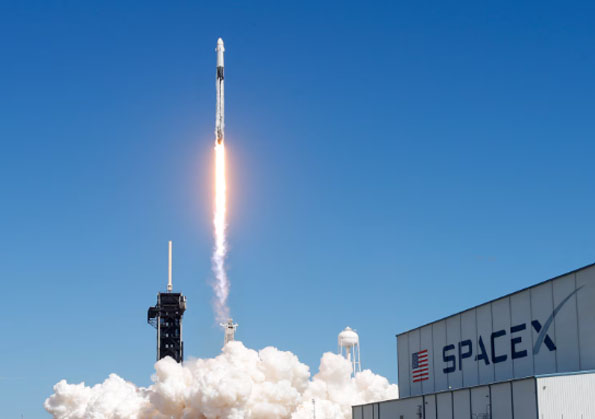
SpaceX vs QDT + AI/AGI
From Aerospace Systems to Distributed Planetary Intelligence
QDT + AI/AGI reinterprets aerospace systems beyond rockets, launch capability, or transportation infrastructure alone.
Within YVT, QDT defines the strategic direction and operational architecture of future planetary systems.
AI/AGI expands that architecture through scalable intelligence, autonomous coordination, adaptive simulation, and continuous system execution.
The following frameworks explore how distributed intelligence could transform the future of aerospace, planetary infrastructure, and human operational environments beyond Earth.
SPACE SYSTEMS — CURRENT PARADIGM vs QDT + AI/AGI
| Current Aerospace Paradigm | QDT + AI/AGI Operational Architecture |
|---|---|
| Rocket-centered systems | Planetary-scale intelligence infrastructure |
| Launch operations | Autonomous interplanetary coordination |
| Spacecraft as isolated vehicles | Spacecraft as distributed intelligence nodes |
| Mission-based architecture | Continuous adaptive operational ecosystems |
| Human-controlled navigation | AGI-assisted autonomous navigation systems |
| Ground-dependent operations | Self-evolving orbital intelligence networks |
| Hardware-focused engineering | Intelligence-centered operational architecture |
| Satellite communication | Planetary cognitive infrastructure |
| Static mission planning | Adaptive real-time system orchestration |
| Space transportation | Distributed operational mobility systems |
| Human-operated infrastructure | Autonomous environmental infrastructure |
| Fixed aerospace interfaces | Contextual adaptive interaction systems |
| Linear engineering workflows | Self-optimizing intelligence coordination |
| Earth-dependent logistics | Autonomous extraterrestrial logistics systems |
| Object-centered aerospace design | Environment-centered intelligence systems |
HUMAN + SPACE SYSTEMS
| Traditional Space Interaction | QDT + AI/AGI Future Systems |
|---|---|
| Humans operate spacecraft | Humans collaborate with cognitive environments |
| Astronaut-centered missions | Distributed intelligence-assisted operations |
| Manual environmental adaptation | Adaptive intelligent habitats |
| Fixed station infrastructure | Self-evolving autonomous habitats |
| Isolated operational systems | Integrated planetary ecosystems |
| Human monitoring dependency | Continuous AGI operational supervision |
| Delayed response systems | Real-time adaptive intelligence systems |
| Device-based control | Environmental interaction intelligence |
| Static mission behavior | Adaptive behavioral coordination systems |
| Mission survival architecture | Long-term cognitive civilization architecture |
SPACE INFRASTRUCTURE TRANSFORMATION
| Existing Infrastructure | QDT + AI/AGI Infrastructure |
|---|---|
| Launch facilities | Autonomous planetary logistics systems |
| Satellite networks | Distributed cognitive orbital systems |
| Communication infrastructure | Real-time planetary intelligence layers |
| Orbital stations | Adaptive space ecosystems |
| Aerospace manufacturing | Autonomous distributed fabrication |
| Earth-controlled systems | Self-regulating extraterrestrial infrastructure |
| Isolated vehicles | Connected intelligent mobility ecosystems |
| Centralized operations | Distributed operational intelligence |
| Energy-dependent systems | Self-optimizing adaptive environments |
| Space engineering | Reality-scale systems architecture |
THE NEXT SPACE COMPETITIVE ADVANTAGE
| Traditional Competitive Advantage | Future Competitive Advantage |
|---|---|
| Rocket capability | Intelligence coordination capability |
| Faster launches | Adaptive planetary systems |
| Space transportation | Distributed operational ecosystems |
| Aerospace engineering | Intelligence-environment coherence |
| Hardware innovation | Autonomous systemic orchestration |
| Infrastructure scale | Cognitive infrastructure scale |
| Manufacturing power | Reality coordination capability |
| Mission execution | Continuous adaptive operations |
| Orbital presence | Distributed intelligence environments |
| Technological leadership | Operational architecture leadership |