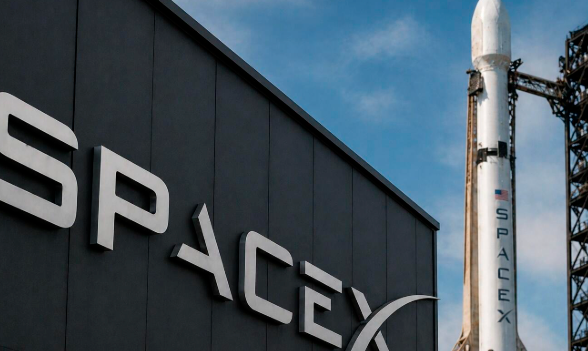
The question is, how can SPACEX operate in space and colonize Mars?
I discuss what I observe with the AI, and I ask it to act as my assistant so we can create a “roadmap” for SPACEX to operate in space and reach Mars. Elon Musk already has a vision, and I have mine. Let’s compare them and extract the best for the success of the SPACEX mission.
The difference between Elon Musk and me is that we observe the world differently. Elon sees rockets (iron, manufacturing), I see “an object” (life, atoms, particles).
Elon thinks in terms of ecosystems, I think in terms of interpreting how the architecture of reality itself evolves (which is alive).
I conclude that SPACEX must become the foundation of a planetary cognitive infrastructure (these are also the foundations on which I built YVT, because it is intelligence—human + “Other Intelligences”—that will bring us success).
To make this article clear for you to read, I’m giving my thoughts to AI to organize for your reading (I enjoyed this moment, thank you).
1. COMPANIES ARE NOT JUST FACING A LOGISTICAL TRANSITION. THEY ARE FACING A CIVILIZATIONAL TRANSITION IN INTERPRETATION.
For decades, aerospace and connectivity systems were designed under the same mental architecture: heavy hardware, physical propulsion, and orbital networks built to centralize communication and data distribution from above.
That paradigm enabled unprecedented global connectivity. But the emergence of advanced artificial intelligence, combined with rapid orbital scaling, alters something deeper than engineering itself: the operational logic of exploration and planetary settlement. The challenge is no longer just to build heavier rockets or faster satellites. The challenge is to understand how intelligence reorganizes infrastructure, environments, and human biology outside our planetary origin.
SpaceX possesses the hardware and the computational engine, but lacks the interpretational framework to prevent systemic entropy. Quantum Design Thinking (QDT) emerges at this breaking point. At YVT, we observe what exists today, what is emerging, and the hidden architectures of the future. The next civilizational advantage will not be determined by mechanical force alone. It will be interpretational.
2. THE SUCCESS OF THE PROPULSION PARADIGM
The orbital era redefined humanity’s reach. High-frequency launches, reusable rockets, and global satellite constellations were not merely engineering milestones; they established a new architecture of global infrastructure. For the first time, planetary connectivity and multiplanetary logistics were centralized within a dominant, private, hyper-efficient industrial apparatus.
SpaceX understood earlier than anyone that the future of aerospace would depend on vertical integration, operational simplicity, and radical cost reduction. The rocket stopped being perceived as an exceptional scientific tool and became a continuous logistical pipeline.
This infrastructure centralized attention, capital, communication, and orbital data within a single dominant architecture. That model has been extraordinarily efficient for establishing orbital dominance. But every successful paradigm creates its own invisible boundaries, and it is precisely within those boundaries where the transition toward distributed cognitive systems must begin.
3. THE HIDDEN LIMITATION
The propulsion paradigm was designed to centralize intelligence inside physical assets—satellites, rockets, and isolated command centers. The system remains dependent on closed containers, heavy data processing centers, continuous hardware iterations, and reactive automation models. Intelligence remains contained inside the machine. The environment remains hostile and passive. The human must constantly adapt to the limitations of the physical vessel.
But advanced artificial intelligence is beginning to alter the foundational conditions of reality. Intelligence no longer needs to be trapped inside a central computer or an orbital server. It must distribute itself across environments, life-support networks, and connected biological infrastructures.
When intelligence is no longer confined to the vessel, the vessel loses its role as the primary center of the system. This is the invisible limitation of SpaceX: trying to solve civilization-scale expansion through brute-force engineering and raw computational data, while leaving the environmental and human origin layer unarchitected.
4. THE TRANSITION TOWARD DISTRIBUTED COGNITIVE INFRASTRUCTURE
The next frontier will not be defined by how far our rockets can travel, but by the architecture of intelligence that sustains us when we get there. Intelligence is stopping its operation as a centralized, reactive software tool and is becoming an environmental, continuous condition.
Within this new scenario, the relationship between humans, machines, and extraplanetary environments changes profoundly. The human no longer just occupies a spacecraft; the spacecraft and the environment become a living, adaptive interface operating in real time.
The logic of isolated planetary vehicles fragments. Everything becomes an interface. Everything becomes a node. Everything becomes operational access to intelligence. The transition requires models capable of organizing behavior, biology, automation, and infrastructure as a single coherent system. From this emerges distributed cognitive infrastructure: an architecture where intelligence belongs to the complete system connecting reality, human biology, and space in continuous time.
5. WHY BRUTE-FORCE ENGINEERING CANNOT INTERPRET IT
Major systemic transitions fail because leaders continue interpreting the future through mental architectures optimized for previous successes. SpaceX builds unmatched industrial hardware and exceptional operational cultures, but its perception models remain optimized to solve problems through raw energy, more qubits, and heavy code deployment.
Developing advanced AI models like Grok or launching starships are technical achievements, but understanding how distributed intelligence reorganizes human survival requires a new architecture of thought.
The current transition requires frameworks capable of interpreting dynamic environments, symbiotic systems, and adaptive human architectures. This is the true breaking point. The difficulty lies in evolving the mental models capable of correctly interpreting the new reality that autonomous intelligence is creating. The challenge is no longer technological evolution alone; it is the evolution of the mental architectures interpreting technology itself.
SPACEX vs QDT
What Exists Today vs What QDT Could Transform
| Dimension | SpaceX Today | QDT + SpaceX Future System |
| Primary Identity | Aerospace and orbital logistics company. | Civilizational reality engineering ecosystem. |
| Core Business | Launch services + satellite internet. | Distributed cognitive infrastructure systems. |
| Systemic Logic | Brute-force hardware-centric engineering. | Adaptive environmental intelligence. |
| Network Architecture | Centralized satellite constellations (Starlink). | Non-local ambient resonance networks. |
| AI Integration | AI-enhanced automation and data analytics (xAI). | AI-native civilizational operating layer. |
| User/Human Relationship | Passenger-vessel physical interaction. | Biological-intelligence continuous symbiosis. |
| Infrastructure Vision | Closed industrial and orbital networks. | Planetary-scale cognitive infrastructure. |
| Habitability Strategy | Mechanical life-support containment. | Bio-sovereign adaptive ecosystems (“Living environments”). |
| Economic Model | Launch contracts and connectivity subscriptions. | Intelligence ecosystem and resource monetization. |
| Ultimate Evolution | Transportation and connectivity provider. | Operating system for multiplanetary civilization. |
WHAT QDT WOULD DETECT INSIDE SPACEX
-
Industrial Mastery: Unparalleled capacity for physical deployment and hardware iteration.
-
Infrastructure Monopolization: Total control over the global data distribution pipeline (Starlink).
-
Algorithmic Reliance: High dependency on stochastic data processing to mitigate physical risks.
-
The Container Trap: Treating intelligence and life support as assets to be enclosed rather than environments to be designed.
WHAT QDT WOULD ASK ELON MUSK
-
What happens to your orbital data centers when stochastic processing encounters cosmic decoherence without a biological observer to inject negentropy?
-
Why design spacecraft under the logic of object transportation instead of engineering adaptive environments that sustain human consciousness outside Earth?
-
Starlink dominates global connectivity, but how will you transform that distribution network into the cognitive infrastructure required to prevent civilizational collapse?
-
Can SpaceX evolve from an infrastructure provider into an architect of adaptive realities?
WHAT QDT + SPACEX COULD CREATE
-
Ambient Intelligence Orbitals: Space networks that map, stabilize, and harmonize Earth’s critical infrastructures in real time via system coherence.
-
Cognitive Life Support Systems: Extraplanetary habitats built under the philosophy of environments that breathe—regulating human biological health by synchronizing with cellular frequencies.
-
Civilization Interface Infrastructure: A unified operational layer linking logistics, global connectivity, and advanced intelligence under a framework of human sovereignty.
QDT STRATEGIC CONCLUSION
SpaceX today designs:
-
vehicles
-
satellites
-
logistical pipelines
QDT pushes SpaceX toward: designing civilizational architectures.