QDT defines direction.
AI/AGI executes intelligence at scale.
The following tables illustrate how existing systems can evolve into adaptive operational architectures through the integration of Quantum Design Thinking and advanced artificial intelligence.
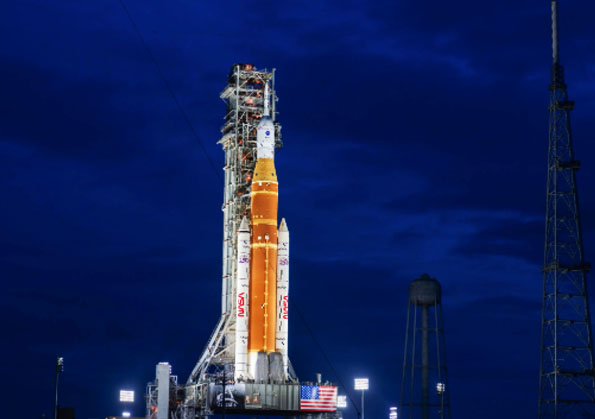
NASA vs QDT + AI/AGI
From Space Exploration to Autonomous Planetary Intelligence Systems
QDT + AI/AGI reinterprets space exploration beyond missions, research programs, or isolated technological advancement.
Within YVT, QDT defines the strategic architecture for future planetary systems, autonomous intelligence environments, and long-term human operational expansion beyond Earth.
AI/AGI expands these architectures through adaptive cognition, distributed coordination, continuous simulation, and scalable autonomous execution across complex environments.
The following frameworks explore how future space systems could evolve from exploration-centered operations into intelligent planetary-scale ecosystems.
SPACE EXPLORATION — CURRENT PARADIGM vs QDT + AI/AGI
| Current NASA Paradigm | QDT + AI/AGI Operational Architecture |
|---|---|
| Exploration missions | Autonomous planetary intelligence systems |
| Human-led mission coordination | Distributed AGI-assisted orchestration |
| Research-centered infrastructure | Operational civilization infrastructure |
| Earth-controlled systems | Semi-autonomous planetary ecosystems |
| Scientific exploration | Environmental intelligence integration |
| Isolated mission architecture | Continuous adaptive operational systems |
| Spacecraft-centered operations | Intelligence-centered ecosystems |
| Human-monitored environments | Self-regulating adaptive environments |
| Mission-based planning | Continuous systemic evolution |
| Aerospace engineering | Reality-scale operational architecture |
| Technical specialization | Integrated multidimensional coordination |
| Mechanical systems | Cognitive environmental systems |
| Linear operational workflows | Adaptive intelligence orchestration |
| Temporary operational presence | Permanent intelligent infrastructures |
| Space as destination | Space as operational environment |
HUMAN + PLANETARY SYSTEMS
| Traditional Space Operations | QDT + AI/AGI Future Systems |
|---|---|
| Human-directed missions | Human-AI collaborative ecosystems |
| Astronaut operational dependency | Distributed environmental intelligence |
| Delayed communication systems | Real-time adaptive coordination |
| Controlled operational environments | Autonomous adaptive ecosystems |
| Earth-based supervision | Semi-independent planetary intelligence |
| Static mission protocols | Dynamic behavioral adaptation systems |
| Survival-oriented operations | Long-term civilization frameworks |
| Technical support infrastructure | Intelligence-integrated environments |
| Fixed operational systems | Self-evolving operational ecosystems |
| Isolated exploration programs | Interconnected planetary intelligence networks |
PLANETARY INFRASTRUCTURE EVOLUTION
| Existing Infrastructure | QDT + AI/AGI Infrastructure |
|---|---|
| Mission control centers | Distributed cognitive coordination systems |
| Orbital infrastructure | Autonomous planetary ecosystems |
| Satellite operations | Planetary-scale intelligence layers |
| Human-operated logistics | Self-orchestrating logistics systems |
| Aerospace manufacturing | Autonomous adaptive fabrication |
| Resource transportation | Intelligent resource ecosystems |
| Mechanical environmental systems | Adaptive cognitive environments |
| Centralized operational control | Distributed autonomous governance |
| Fixed engineering structures | Evolving intelligence architectures |
| Research infrastructure | Civilization-scale operational systems |
THE NEXT SPACE LEADERSHIP ADVANTAGE
| Traditional Leadership Model | Future Leadership Model |
|---|---|
| Space exploration capability | Planetary intelligence capability |
| Scientific research leadership | Operational architecture leadership |
| Mission execution | Autonomous ecosystem coordination |
| Aerospace engineering | Distributed cognitive infrastructure |
| Orbital presence | Environmental intelligence systems |
| Human mission scalability | Civilization scalability |
| Technological innovation | Reality coordination capability |
| Mechanical infrastructure | Adaptive intelligence ecosystems |
| Space transportation | Planetary operational orchestration |
| Exploration systems | Long-term human-environment integration |